

Piero di Cosimo (1461-1521) was a notable painter of the Italian Renaissance, whose work was characterised by an imaginative and inventive approach to both subject and style. Born Piero di Lorenzo, he acquired the name “di Cosimo” from his apprenticeship under Cosimo Rosselli, a prominent Florentine artist. Piero’s career was primarily based in Florence, where he developed a reputation for his eccentricity and originality.
His early training under Cosimo Rosselli proved formative, particularly during the period when the workshop was commissioned to assist with the decoration of the Sistine Chapel in Rome. Piero is believed to have worked on several sections of this monumental project, absorbing influences that would later surface in his own work. Despite these early collaborative efforts, Piero’s independent career was marked by a departure from the conventions of the time.
Piero di Cosimo’s paintings are renowned for their striking diversity. He was adept at both religious and mythological themes, often blending the boundaries between the sacred and the profane. Among his most famous works are his mythological scenes, such as “The Discovery of Honey by Bacchus” and “The Hunt,” which display a fascination with nature, fantastical creatures, and the origins of civilisation. These pieces frequently contain detailed landscapes teeming with animals, and reveal a deep curiosity about the natural world, a rarity among his contemporaries.
In religious painting, his altarpieces and panels, such as “The Immaculate Conception with Saints”, demonstrate a delicate handling of light and an individualistic approach to composition. Piero’s figures are often imbued with a sense of psychological depth and humanity, setting them apart from the more formalised figures of earlier Florentine art. His palette, too, is distinctive, favouring subtle gradations and atmospheric effects.
Piero di Cosimo was by all accounts a singular character. Giorgio Vasari, the famous biographer of Renaissance artists, described him as eccentric and reclusive, with peculiar habits and a penchant for solitude. He was said to be fascinated by fire and storms, and to have lived for long periods on a diet of hard-boiled eggs. Yet, his idiosyncratic outlook was matched by an innovative spirit, rendering his paintings unique within the flourishing artistic culture of Renaissance Florence.
Piero di Cosimo’s legacy lies in his imaginative vision and technical skill, which influenced later artists such as Andrea del Sarto. Though not as widely known as some of his contemporaries, his work remains a testament to the diversity and creativity of the High Renaissance.
Images to download
-

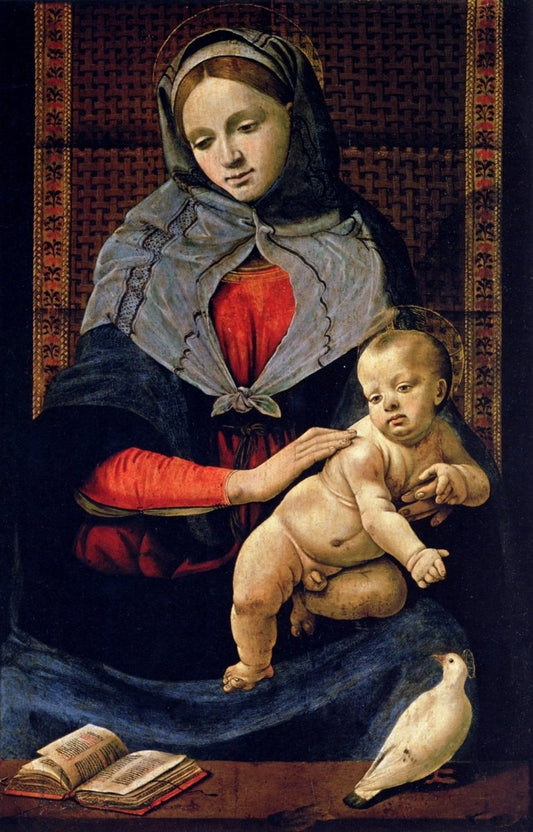
Cosimo, Piero di (1461-1521) - Madonna and Child with a Dove c.1490-1500
Vendor:Digital Download - 1 imageRegular price £0.80Regular priceUnit price per -

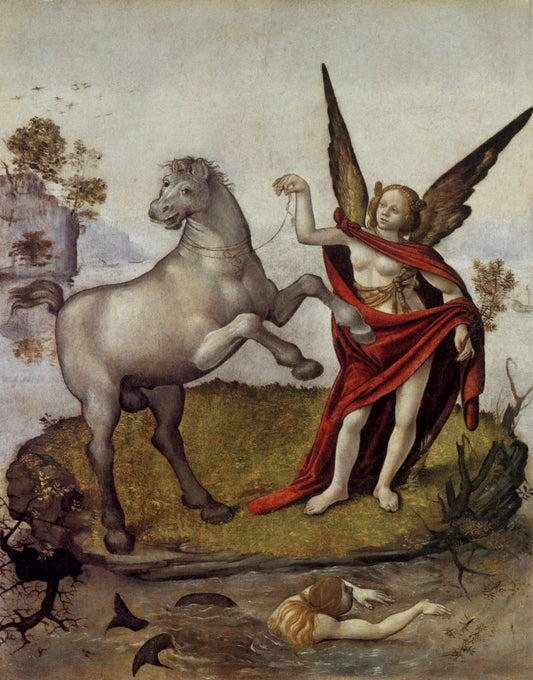
Cosimo, Piero di (1461-1521) - Allegory c.1500
Vendor:Digital Download - 1 imageRegular price £0.80Regular priceUnit price per


Latest Picture Trove Blog Posts
View all-

William Morris’s Strawberry Thief: The Story Behind a Classic Arts and Crafts Pattern
Few William Morris designs are as instantly recognisable as Strawberry Thief. With its richly patterned foliage, small red strawberries and watchful birds hidden among curling leaves, it has become one of the most loved designs of the Arts and Crafts movement.
William Morris’s Strawberry Thief: The Story Behind a Classic Arts and Crafts Pattern
Few William Morris designs are as instantly recognisable as Strawberry Thief. With its richly patterned foliage, small red strawberries and watchful birds hidden among curling leaves, it has become one of the most loved designs of the Arts and Crafts movement.
-

Glasgow and the Mackintosh Style
We recently took ourselves off to Scotland, and on our travels, we popped into the Mackintosh Tea Rooms in Glasgow for a bit of a nose around and a spot of lunch.
Glasgow and the Mackintosh Style
We recently took ourselves off to Scotland, and on our travels, we popped into the Mackintosh Tea Rooms in Glasgow for a bit of a nose around and a spot of lunch.
-

A Trip to Edinburgh & Glasgow, and Scottish Art
We have just returned from a well-deserved few days' break in Scotland, visiting both Edinburgh and Glasgow, taking in Scottish art and tea rooms!
A Trip to Edinburgh & Glasgow, and Scottish Art
We have just returned from a well-deserved few days' break in Scotland, visiting both Edinburgh and Glasgow, taking in Scottish art and tea rooms!


