

Jean-Baptiste-Camille Corot (1796-1875) is renowned as one of the foremost figures in 19th-century French painting, particularly celebrated for his landscape and plein air works.
Often associated with the Barbizon School, a group of artists advocating for naturalism and spontaneity in their paintings, Corot’s works laid the foundational stones for the Impressionist movement that would follow. His approach to light, atmosphere, and colour has left an indelible mark on the art world, influencing generations of painters.
Born in Paris to a family of modest means, Corot showed an early interest in art. He moved away from a career in commerce, which his father had envisaged for him, and instead pursued his passion for painting. He received his training under the tutelage of several artists, including the neoclassical painter Jean-Victor Bertin and later the Romantic painter Claude-Victor Perrin. However, it was the influence of nature that profoundly shaped Corot’s artistic vision, particularly his excursions to the countryside around Paris and more distant locales.
Corot was an early adopter of outdoor painting, a practice increasingly popular in the 19th century as artists began to seek authenticity in their depictions of the natural world. His works often capture fleeting moments of light and shadow, revealing his profound sensitivity to the atmospheric conditions of a landscape.
One of the most notable characteristics of Corot’s work is his masterful handling of light. He achieved a distinctive luminosity in his paintings that seemed to transform the landscape into dreamlike visions, blurring the lines between reality and imagination. His travels through Italy significantly influenced his aesthetic approach.
In the early 1820s, Corot spent several years in Italy, where he absorbed the techniques of the Old Masters and the grandeur of the Roman landscape. Works such as "View of Rome" and "The Colosseum" showcase his ability to merge the classical principles of composition with a fresh observation of nature, resulting in harmonious and serene landscapes.
Despite his deep connection to nature, Corot also explored figurative subjects throughout his career. His charm in portraying serene women in pastoral settings became a hallmark of his style. Paintings such as “The Woman with a Pearl Necklace” exhibit not just a striking realism but also a poetic quality that brings life to his figures. The soft, flowing brushstrokes and ethereal light in these works resonate with a sense of tranquillity and beauty.
Throughout his life, Corot was both praised and critiqued by contemporaries. Initially, he faced some resistance from the traditional art community, which favoured the rigidities of academic painting. However, as the art world began to shift towards the Impressionists and their emphasis on spontaneity and light, Corot’s reputation grew. He was appreciated for his foresight and independence, and he became a mentor to young artists, including Impressionists like Camille Pissarro and Claude Monet.
Corot’s legacy endures today; he is celebrated not only for his technical prowess but also for the emotional depth within his works. His ability to evoke mood and atmosphere through colour and light remains a significant influence on modern landscape painting.
Images to download
-

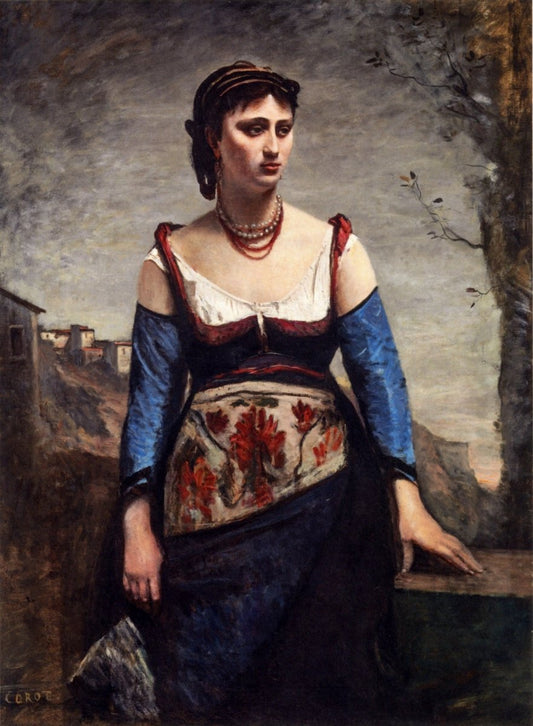
Corot, Jean-Baptiste C. (1796-1875) - Agostina 1866
Vendor:Digital Download - 1 imageRegular price £0.80Regular priceUnit price per -

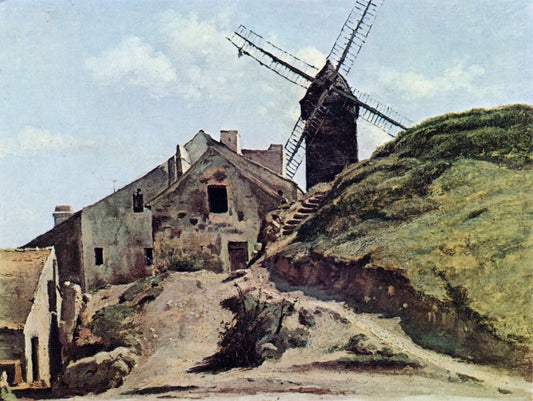
Corot, Jean-Baptiste C. (1796-1875) - Moulin de la Galette, Montmartre 1840
Vendor:Digital Download - 1 imageRegular price £0.80Regular priceUnit price per -

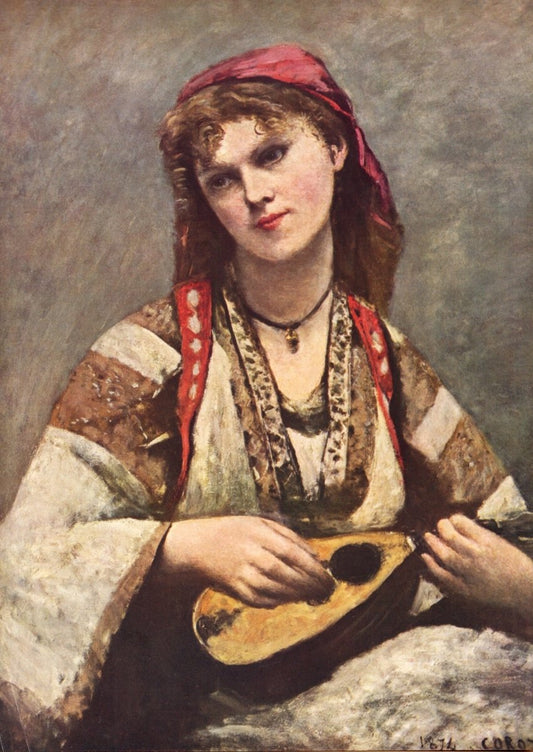
Corot, Jean-Baptiste C. (1796-1875) - Christine Nilsson
Vendor:Digital Download - 1 imageRegular price £0.80Regular priceUnit price per


Latest Picture Trove Blog Posts
View all-

William Morris’s Strawberry Thief: The Story Behind a Classic Arts and Crafts Pattern
Few William Morris designs are as instantly recognisable as Strawberry Thief. With its richly patterned foliage, small red strawberries and watchful birds hidden among curling leaves, it has become one of the most loved designs of the Arts and Crafts movement.
William Morris’s Strawberry Thief: The Story Behind a Classic Arts and Crafts Pattern
Few William Morris designs are as instantly recognisable as Strawberry Thief. With its richly patterned foliage, small red strawberries and watchful birds hidden among curling leaves, it has become one of the most loved designs of the Arts and Crafts movement.
-

Glasgow and the Mackintosh Style
We recently took ourselves off to Scotland, and on our travels, we popped into the Mackintosh Tea Rooms in Glasgow for a bit of a nose around and a spot of lunch.
Glasgow and the Mackintosh Style
We recently took ourselves off to Scotland, and on our travels, we popped into the Mackintosh Tea Rooms in Glasgow for a bit of a nose around and a spot of lunch.
-

A Trip to Edinburgh & Glasgow, and Scottish Art
We have just returned from a well-deserved few days' break in Scotland, visiting both Edinburgh and Glasgow, taking in Scottish art and tea rooms!
A Trip to Edinburgh & Glasgow, and Scottish Art
We have just returned from a well-deserved few days' break in Scotland, visiting both Edinburgh and Glasgow, taking in Scottish art and tea rooms!


