

Andrea del Castagno (c.1421-1457) was a significant figure in the Italian Renaissance, particularly recognised for his contributions to the development of Florentine painting in the mid-15th century. Born Andrea di Bartolo di Bargilla in the small town of Castagno, near Florence, he later adopted the name of his birthplace as his professional moniker. His artistic career was relatively short, as he died at the age of thirty-six, but within that time he left an indelible mark on the world of art.
Castagno’s work is characterised by a striking sense of realism, robust figures, and a dramatic use of perspective and composition. He was notably influenced by the innovations of Masaccio and the sculptural forms of Donatello, and in turn, his own style was a precursor to later High Renaissance artists, such as Leonardo da Vinci and Michelangelo. His paintings are noted for their emotional intensity and physical dynamism, setting them apart from the more restrained works of some of his contemporaries.
One of Castagno’s most renowned works is the fresco cycle at the convent of Sant’Apollonia in Florence, painted around 1447-1450. This series, which includes the famous "Last Supper", demonstrates his mastery of spatial illusionism and the expressive potential of the human figure. The "Last Supper" in particular is lauded for its psychological depth and the powerful individuality of each apostle, as well as the dramatic use of light and shadow to create a sense of immediacy and tension. The fresco’s architectural setting, painted in trompe-l’oeil, also reflects the Renaissance fascination with perspective.
Another celebrated project is his series of frescoes depicting famous men and women, also at Sant’Apollonia, which includes figures such as Dante, Petrarch, and Queen Tomyris. These works exhibit Castagno’s skill in portraiture, capturing the personalities of his subjects with striking clarity and presence.
Despite his achievements, Castagno’s reputation suffered somewhat after Vasari’s "Lives of the Artists" wrongly ascribed to him a murderous temperament. This myth, now debunked, overshadowed the appreciation of his artistic legacy for centuries. Today, Andrea del Castagno is recognised as a pioneering force in the transition towards the heightened realism and expressive power that would define later Renaissance art. His innovative use of perspective, anatomy, and psychological insight continues to be admired by art historians and enthusiasts alike.
Images to download
-

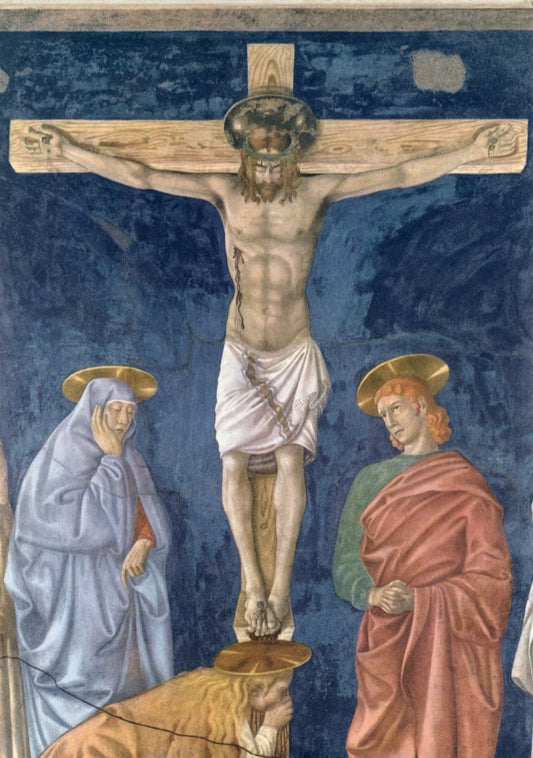
Castagno, Andrea del (1421-1457) - Crucifixion (detail)
Vendor:Digital Download - 1 imageRegular price £0.80Regular priceUnit price per

Latest Picture Trove Blog Posts
View all-

William Morris’s Strawberry Thief: The Story Behind a Classic Arts and Crafts Pattern
Few William Morris designs are as instantly recognisable as Strawberry Thief. With its richly patterned foliage, small red strawberries and watchful birds hidden among curling leaves, it has become one of the most loved designs of the Arts and Crafts movement.
William Morris’s Strawberry Thief: The Story Behind a Classic Arts and Crafts Pattern
Few William Morris designs are as instantly recognisable as Strawberry Thief. With its richly patterned foliage, small red strawberries and watchful birds hidden among curling leaves, it has become one of the most loved designs of the Arts and Crafts movement.
-

Glasgow and the Mackintosh Style
We recently took ourselves off to Scotland, and on our travels, we popped into the Mackintosh Tea Rooms in Glasgow for a bit of a nose around and a spot of lunch.
Glasgow and the Mackintosh Style
We recently took ourselves off to Scotland, and on our travels, we popped into the Mackintosh Tea Rooms in Glasgow for a bit of a nose around and a spot of lunch.
-

A Trip to Edinburgh & Glasgow, and Scottish Art
We have just returned from a well-deserved few days' break in Scotland, visiting both Edinburgh and Glasgow, taking in Scottish art and tea rooms!
A Trip to Edinburgh & Glasgow, and Scottish Art
We have just returned from a well-deserved few days' break in Scotland, visiting both Edinburgh and Glasgow, taking in Scottish art and tea rooms!


