

Félix Henri Bracquemond (1833-1914) was a pivotal figure in the development of the arts in nineteenth-century France, renowned not only for his own achievements as a painter and printmaker but also for his far-reaching influence on the decorative arts and the spread of Japonisme across Europe. Bracquemond’s career is marked by innovation, versatility, and a keen eye for the aesthetics of both East and West, making him a seminal character in the transition from academic to modern art.
Born in Paris in 1833, Bracquemond was largely self-taught as an artist, drawing inspiration from the Old Masters and contemporary trends alike. He began his professional journey as a lithographer and etcher, quickly gaining recognition for his technical prowess and his sensitive, lively line work. Bracquemond’s early etchings, often after works by masters such as Rembrandt and Dürer, demonstrated his exceptional skill and deep appreciation for the traditions of European printmaking.
However, it was his engagement with Japanese art that truly set Bracquemond apart from his contemporaries. In the 1850s, he encountered a volume of Hokusai’s manga, which had been used as packing material for imported porcelain. This serendipitous discovery marked a turning point in his career and in the trajectory of Western art. Fascinated by the bold compositions, dynamic lines, and novel subject matter of Japanese prints, Bracquemond became an early and enthusiastic proponent of Japonisme, the Western craze for all things Japanese that swept through Europe in the latter half of the nineteenth century.
Bracquemond’s advocacy for Japonisme was both practical and visionary. Not content to merely collect or imitate Japanese art, he integrated its principles into his own work and encouraged others to do the same. Perhaps most notably, he designed a celebrated service of porcelain for the renowned French ceramics manufacturer Haviland Co. The service, known as the “Rousseau Service,” featured motifs drawn directly from Japanese prints and became an iconic example of cross-cultural artistic exchange. Bracquemond’s influence in this regard extended to other artists and artisans, catalysing a broader transformation in European decorative arts.
In addition to his work in ceramics and printmaking, Bracquemond was an accomplished painter and a frequent exhibitor at the Paris Salon. His paintings, often landscapes or scenes of everyday life, were marked by a subtle realism and a distinctive sense of atmosphere. Although he was closely associated with the Impressionists - he participated in their first group exhibition in 1874 - Bracquemond maintained an individual approach, blending academic rigour with an openness to new ideas.
Throughout his long career, Bracquemond was a tireless advocate for the revival of etching as a fine art. He published influential treatises on the technique and mentored a generation of younger artists, helping to elevate printmaking from a reproductive craft to a respected artistic discipline. By the time of his death in 1914, Bracquemond had left an indelible mark on the artistic landscape of his era, bridging traditions and cultures with a restless spirit of curiosity and innovation.
Images to download
-

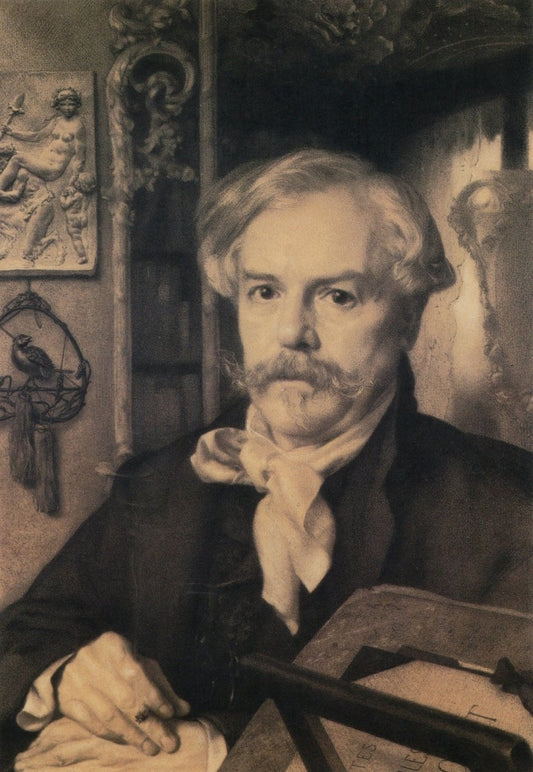
Bracquemond, Felix (1833-1914) - M. Edmond de Goncourt 1880
Vendor:Digital Download - 1 imageRegular price £0.80Regular priceUnit price per -

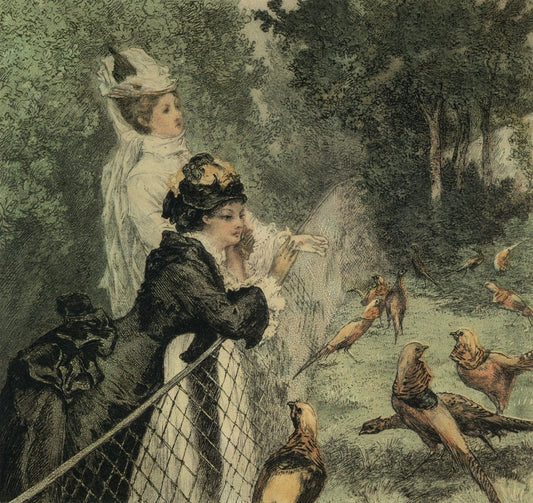
Bracquemond, Felix (1833-1914) - At the Jardin d'Acclimatation 1873
Vendor:Digital Download - 1 imageRegular price £0.80Regular priceUnit price per


Latest Picture Trove Blog Posts
View all-

William Morris’s Strawberry Thief: The Story Behind a Classic Arts and Crafts Pattern
Few William Morris designs are as instantly recognisable as Strawberry Thief. With its richly patterned foliage, small red strawberries and watchful birds hidden among curling leaves, it has become one of the most loved designs of the Arts and Crafts movement.
William Morris’s Strawberry Thief: The Story Behind a Classic Arts and Crafts Pattern
Few William Morris designs are as instantly recognisable as Strawberry Thief. With its richly patterned foliage, small red strawberries and watchful birds hidden among curling leaves, it has become one of the most loved designs of the Arts and Crafts movement.
-

Glasgow and the Mackintosh Style
We recently took ourselves off to Scotland, and on our travels, we popped into the Mackintosh Tea Rooms in Glasgow for a bit of a nose around and a spot of lunch.
Glasgow and the Mackintosh Style
We recently took ourselves off to Scotland, and on our travels, we popped into the Mackintosh Tea Rooms in Glasgow for a bit of a nose around and a spot of lunch.
-

A Trip to Edinburgh & Glasgow, and Scottish Art
We have just returned from a well-deserved few days' break in Scotland, visiting both Edinburgh and Glasgow, taking in Scottish art and tea rooms!
A Trip to Edinburgh & Glasgow, and Scottish Art
We have just returned from a well-deserved few days' break in Scotland, visiting both Edinburgh and Glasgow, taking in Scottish art and tea rooms!


