

George Caleb Bingham (1811-1879) was an American artist, soldier and politician known in his lifetime as "the Missouri Artist". Initially a Whig, he was elected as a delegate to the Missouri legislature before the American Civil War where he fought against the extension of slavery westward. During that war, although born in Virginia, Bingham was dedicated to the Union cause and became captain of a volunteer company which helped keep the state from joining the Confederacy, and then served four years as Missouri's treasurer. During his final years, Bingham held several offices in Kansas City, while also serving as Missouri's Adjutant General. His paintings of American frontier life along the Missouri River exemplify the Luminist style.
Born on a farm in Augusta County, Virginia, George Bingham was the second of seven children that Mary Amend had with her husband Henry Vest Bingham. Upon their marriage, Mary's father Matthias Amend gave the Binghams ownership of the family mill, 1,180 acres (4.8 km2) land, and several slaves with the agreement that Matthias could live with the family for the rest of his life. Henry Bingham offered the land and mill as surety for a friend's debt and, when the friend died in 1818, all was lost. In 1819, the Bingham family (including grandfather Amend) moved to Franklin, Missouri, on the Missouri River near the state's centre as well as the eastern terminus of the Santa Fe Trail, "where the land was said to be bountiful, fertile and cheap."
George Bingham was initially educated by his mother, and self-taught as an artist. In 1823, Bingham's father Henry, who had initially opened a tavern in Franklin and in 1821 became the judge of the Howard County Court, died of malaria at the age of thirty-eight. His investment in a tobacco venture had failed, and debts forced the sale of the home in Franklin. The young sons barely kept their small farm in nearby Saline County afloat, in part with the help of their father's brother John, who had moved to the area and donated half the land which became Arrow Rock. Mary Bingham opened a school for girls on the farmstead. George, then twelve, worked as the school janitor, and later received some art tutoring when the school hired Mattie Wood as an art teacher.
By age nineteen, Bingham was painting portraits for $20.00 apiece, often completing the works in a single day. He found clients in Howard and Saline counties and nearby areas. Though his painting abilities were still developing, he impressed his patrons with strong draftsmanship as well as his native ability to capture his subject's likeness, and he was able to support himself by this work by 1833.
By 1838, Bingham had established a studio in St. Louis, the state's major city, and was beginning to make a name as a portrait artist. While Bingham frequently worked in St. Louis, he kept his principal residence in Arrow Rock for years.
Bingham then decided to try formal education in the east and moved with his young wife to Philadelphia, Pennsylvania, where he spent three years studying art at the Pennsylvania Academy of the Fine Arts, including a trip to New York City to visit the National Academy of Design exhibition. Bingham then spent nearly five years in Washington, D.C., where he painted portraits of various politicians, including former president John Quincy Adams.
In 1836, the year Missouri expanded with the Platte Purchase of former Native American territory (thus violating the Missouri Compromise of 1820 which had led to the state's creation), 25-year-old Bingham married 18-year-old Sarah Elizabeth Hutchison (1818–1848), who bore him four children before her death. From 1837 to 1845 they lived in Arrow Rock in Saline County, where their house has been designated a National Historic Landmark. She died in 1848 at the age of twenty-nine. Bingham's mother Mary helped him raise his children before she died in 1851.
Bingham married twice more, first to Eliza K. Thomas. After several years, she was confined to a mental asylum, where she died in 1876. He next married the widow Martha Lykins, a Kansas City community activist respected for her work among orphans (despite her Confederate activism years earlier), but their marriage lasted less than a year before Bingham died (Martha Lykins Bingham died in 1890).
Bingham returned with his family to St. Louis permanently in 1845. Despite, or because of, his commercial success through the American Art Union based in New York, Bingham ran for election as a Whig to the Missouri House of Representatives the following year. He appeared to have won in 1846 by 3 votes, but lost in a recount. In a reprise of the election in 1848, Bingham won the seat by a decisive margin, becoming one of the few artists to serve in elected political office. He actively opposed the pro-slavery "Jackson resolutions" in 1849, although their proponent was also a resident of Saline County. He would also represent Missouri's eighth district at the Whig National Convention in June 1852. Bingham's political interests would be reflected in his vivid paintings of frontier political life.
In 1856, two years after the tumultuous creation of the Kansas Territory, Bingham traveled to Europe for an extensive tour with his second wife Eliza and youngest daughter. First they stayed in Paris for several months, where Bingham fulfilled a long-cherished desire and studied the Old Masters at the Louvre Museum, likely his chief reason for going abroad. They went on to Düsseldorf, Germany, where they lived until 1859, taking part in the Düsseldorf school of painting. Bingham lived and worked among the American and German artists of the art colony, among whom was the German-American Emanuel Leutze, the most prominent historical painter in the United States. (Washington Crossing the Delaware was then his most famous work.) Leutze was unusual for living in both countries and had an open studio in Düsseldorf, where he welcomed Bingham as a friend and already successful artist. While in Germany, Bingham worked on important commissions from the Missouri State Legislature of Presidents Washington and Jefferson (later destroyed by fire), as well as independent paintings.
Bingham returned to America after the death of his wife's father in 1859. He continued to travel throughout Missouri seeking commissions, and again became involved in politics.
In September 1861, Governor Gamble appointed Bingham State Treasurer of Missouri, and he served honestly and competently throughout the war. He continued to paint more portraits, which had always been his "bread and butter" work.
Although the Whig Party was nearly defunct by the time Bingham returned to Missouri, Bingham also returned to politics, and he would later align with the Democratic Party. He continued to stay involved in politics in the post-Civil War years through political appointments. In 1874, he was appointed president of Kansas City Board of Police Commissioners, and appointed the first chief of police there. In 1875, the governor appointed Bingham as Adjutant-General of Missouri, so thereafter he was often referred to as "General Bingham".
Toward the end of his life, although quite ill, Bingham was appointed the first Professor of Art at the University of Missouri in Columbia, Missouri, which his friend Major Rollins and the Rollins family helped found.
Bingham died on July 7, 1879, in Kansas City, Missouri. He was survived by his wife of less than a year, as well as his son by his second wife, (James) Rollins Bingham (1861-1910), who became a lawyer in Independence, Missouri. George Caleb Bingham was buried at Kansas City's Union Cemetery.
Images to download
-

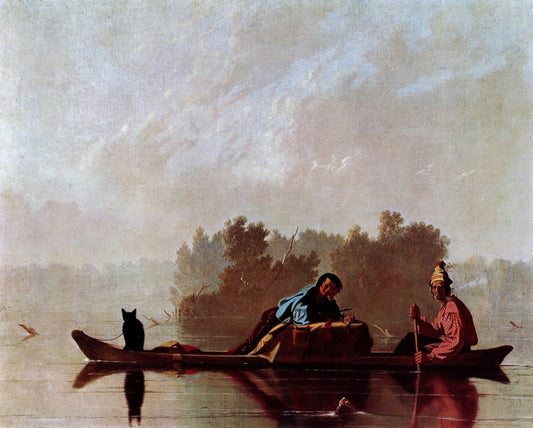
Bingham, George Caleb (1811-1879) - Fur traders going down the Missouri 1845
Vendor:Digital Download - 1 imageRegular price £0.80Regular priceUnit price per -

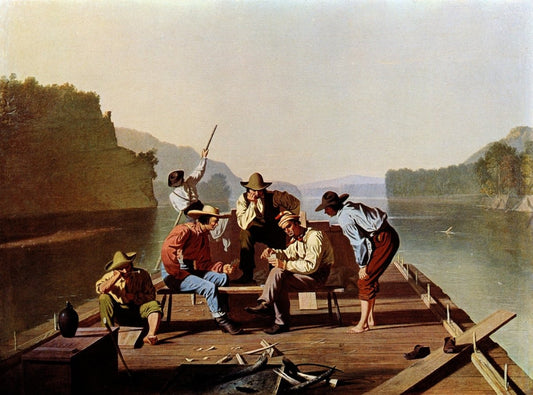
Bingham, George Caleb (1811-1879) - Raftsmen playing cards 1847
Vendor:Digital Download - 1 imageRegular price £0.80Regular priceUnit price per -

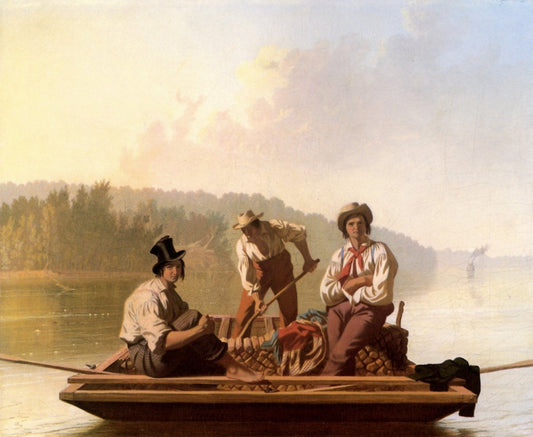
Bingham, George Caleb (1811-1879) - Boatmen on the Missouri 1846
Vendor:Digital Download - 1 imageRegular price £0.80Regular priceUnit price per -

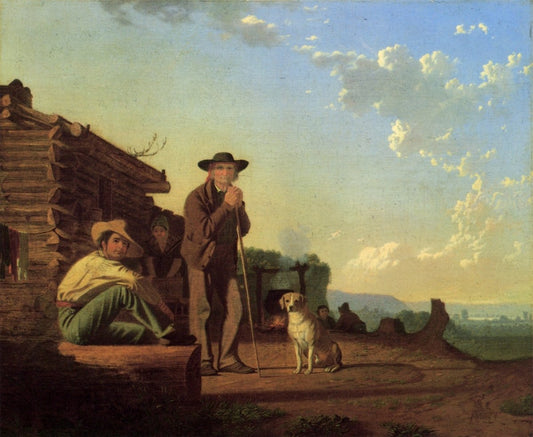
Bingham, George Caleb (1811-1879) - The Squatters 1850
Vendor:Digital Download - 1 imageRegular price £0.80Regular priceUnit price per -

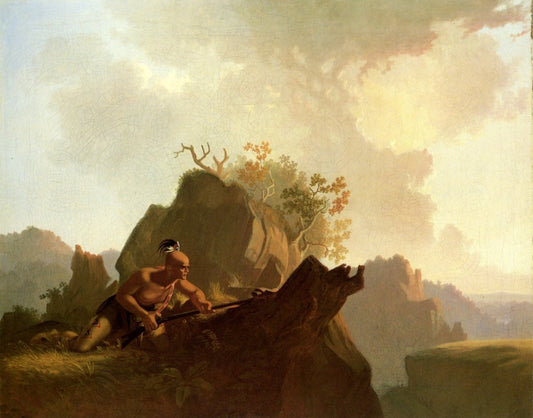
Bingham, George Caleb (1811-1879) - The Concealed Enemy 1845
Vendor:Digital Download - 1 imageRegular price £0.80Regular priceUnit price per -

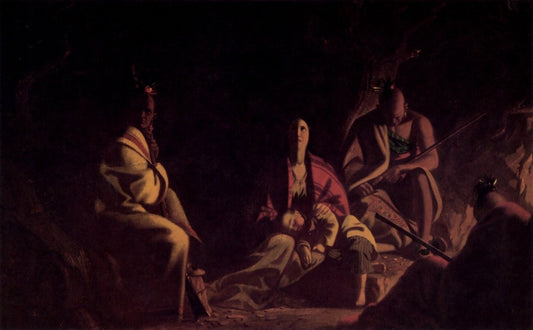
Bingham, George Caleb (1811-1879) - Captured by the Indians 1848
Vendor:Digital Download - 1 imageRegular price £0.80Regular priceUnit price per -

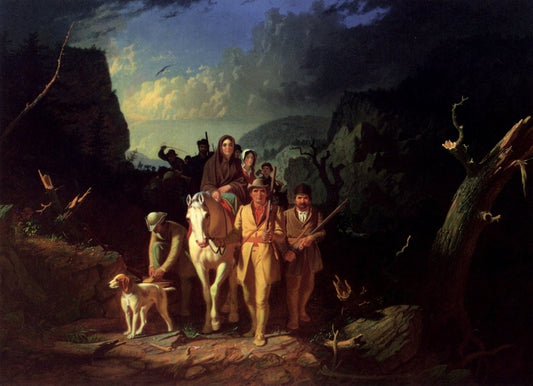
Bingham, George Caleb (1811-1879) - Daniel Boone escorting settlers through the Cumberland Gap 1851-2
Vendor:Digital Download - 2 imagesRegular price £0.80Regular priceUnit price per -

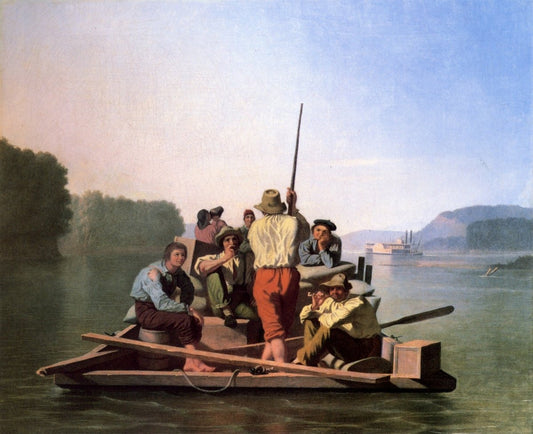
Bingham, George Caleb (1811-1879) - Lighter Relieving the Steamboat Aground 1846-7
Vendor:Digital Download - 2 imagesRegular price £0.80Regular priceUnit price per -

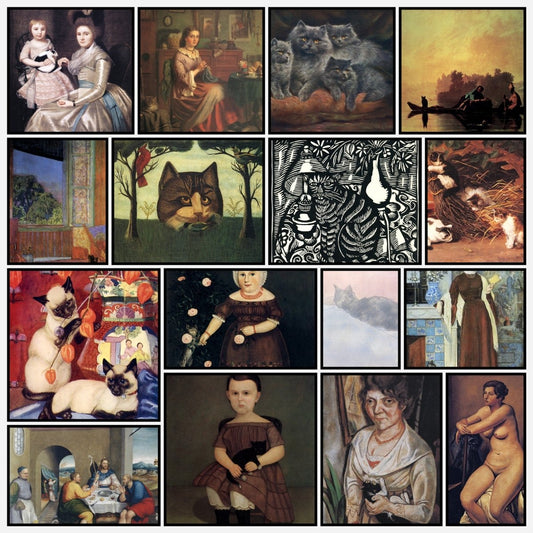
Cats in Art - 82 High Resolution Images
Vendor:Digital Download - 82 imagesRegular price £4.00Regular priceUnit price per


Latest Picture Trove Blog Posts
View all-

William Morris’s Strawberry Thief: The Story Behind a Classic Arts and Crafts Pattern
Few William Morris designs are as instantly recognisable as Strawberry Thief. With its richly patterned foliage, small red strawberries and watchful birds hidden among curling leaves, it has become one of the most loved designs of the Arts and Crafts movement.
William Morris’s Strawberry Thief: The Story Behind a Classic Arts and Crafts Pattern
Few William Morris designs are as instantly recognisable as Strawberry Thief. With its richly patterned foliage, small red strawberries and watchful birds hidden among curling leaves, it has become one of the most loved designs of the Arts and Crafts movement.
-

Glasgow and the Mackintosh Style
We recently took ourselves off to Scotland, and on our travels, we popped into the Mackintosh Tea Rooms in Glasgow for a bit of a nose around and a spot of lunch.
Glasgow and the Mackintosh Style
We recently took ourselves off to Scotland, and on our travels, we popped into the Mackintosh Tea Rooms in Glasgow for a bit of a nose around and a spot of lunch.
-

A Trip to Edinburgh & Glasgow, and Scottish Art
We have just returned from a well-deserved few days' break in Scotland, visiting both Edinburgh and Glasgow, taking in Scottish art and tea rooms!
A Trip to Edinburgh & Glasgow, and Scottish Art
We have just returned from a well-deserved few days' break in Scotland, visiting both Edinburgh and Glasgow, taking in Scottish art and tea rooms!


