

Willi Baumeister (1889-1955) was a pioneering German artist, designer, and influential figure in the development of modern art in Europe. Renowned for his innovative approach to painting, Baumeister’s career spanned a period of significant political and artistic upheaval, during which he remained steadfastly committed to experimentation and abstraction.
Baumeister was born in Stuttgart, Germany, and began his artistic education at the Stuttgart Academy of Fine Arts, where he studied under Adolf Hölzel. Early in his career, he was heavily influenced by Cubism and Constructivism, two movements that would shape the evolution of his style. His early works, such as the “Wall Picture” series, reveal a fascination with geometric forms, structure, and the interplay of colour and space.
During the 1920s, Baumeister became associated with the avant-garde, participating in influential exhibitions and collaborating with contemporaries such as Oskar Schlemmer and Paul Klee. He was also involved with the Bauhaus movement, sharing its commitment to uniting art, craft, and technology. His work as a typographer and set designer further demonstrated his versatility and commitment to modernist ideals.
The rise of the Nazi regime in Germany brought significant challenges for Baumeister. His art was deemed “degenerate”, and from 1933 he was prohibited from teaching or exhibiting in public. Nevertheless, Baumeister continued to create, producing works in private that reflected his ongoing exploration of abstraction and symbolic forms. Notable among these are his “Ideogram” and “Metaphysical Landscape” series, which demonstrate a profound engagement with universal themes and a move towards a more spiritual, timeless iconography.
After the Second World War, Baumeister returned to public prominence, becoming a professor at the State Academy of Fine Arts in Stuttgart. His influence as a teacher was considerable, inspiring a new generation of artists to pursue non-representational art. Baumeister’s post-war works are characterised by a vibrant palette, dynamic composition, and a sense of optimism, reflecting his belief in the regenerative power of art.
Throughout his life, Baumeister was also an articulate theoretician, publishing essays that articulated his vision for modern art. He emphasised the importance of artistic freedom, the role of intuition, and the need for art to transcend the boundaries of time and place. Today, Willi Baumeister is celebrated as a central figure in twentieth-century abstraction, whose legacy endures in both his artworks and his writings.
Images to download
-

 Value Bundle
New for 2026 - 476 Image Value Bundle
Vendor:Digital Download - 476 imagesRegular price £35.00Regular priceUnit price per£50.40Sale price £35.00Value Bundle -

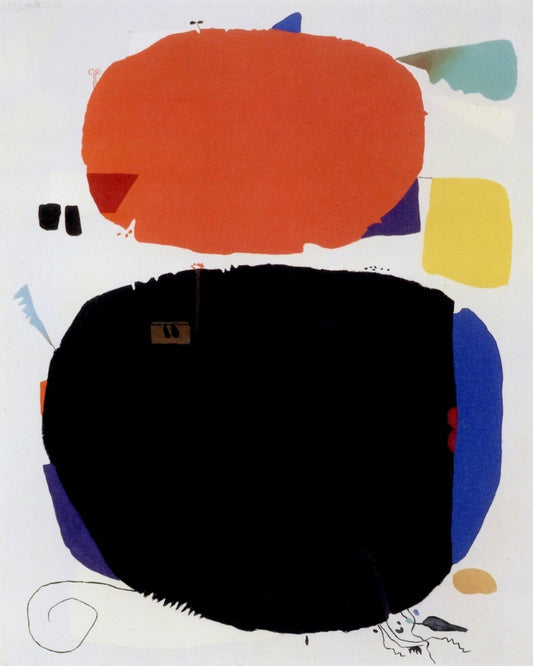
Baumeister, Willi (1889-1955) - Mortaruru with Red Overhead 1953
Vendor:Digital Download - 1 imageRegular price £0.80Regular priceUnit price per -

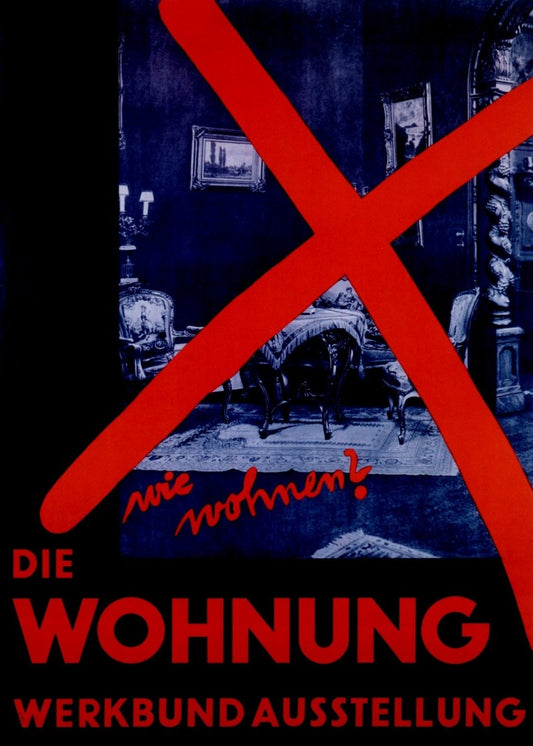
Baumeister, Willi (1889-1955) - Die Wohnung Werkbund Ausstellung 1927
Vendor:Digital Download - 1 imageRegular price £0.80Regular priceUnit price per


Latest Picture Trove Blog Posts
View all-

William Morris’s Strawberry Thief: The Story Behind a Classic Arts and Crafts Pattern
Few William Morris designs are as instantly recognisable as Strawberry Thief. With its richly patterned foliage, small red strawberries and watchful birds hidden among curling leaves, it has become one of the most loved designs of the Arts and Crafts movement.
William Morris’s Strawberry Thief: The Story Behind a Classic Arts and Crafts Pattern
Few William Morris designs are as instantly recognisable as Strawberry Thief. With its richly patterned foliage, small red strawberries and watchful birds hidden among curling leaves, it has become one of the most loved designs of the Arts and Crafts movement.
-

Glasgow and the Mackintosh Style
We recently took ourselves off to Scotland, and on our travels, we popped into the Mackintosh Tea Rooms in Glasgow for a bit of a nose around and a spot of lunch.
Glasgow and the Mackintosh Style
We recently took ourselves off to Scotland, and on our travels, we popped into the Mackintosh Tea Rooms in Glasgow for a bit of a nose around and a spot of lunch.
-

A Trip to Edinburgh & Glasgow, and Scottish Art
We have just returned from a well-deserved few days' break in Scotland, visiting both Edinburgh and Glasgow, taking in Scottish art and tea rooms!
A Trip to Edinburgh & Glasgow, and Scottish Art
We have just returned from a well-deserved few days' break in Scotland, visiting both Edinburgh and Glasgow, taking in Scottish art and tea rooms!


