
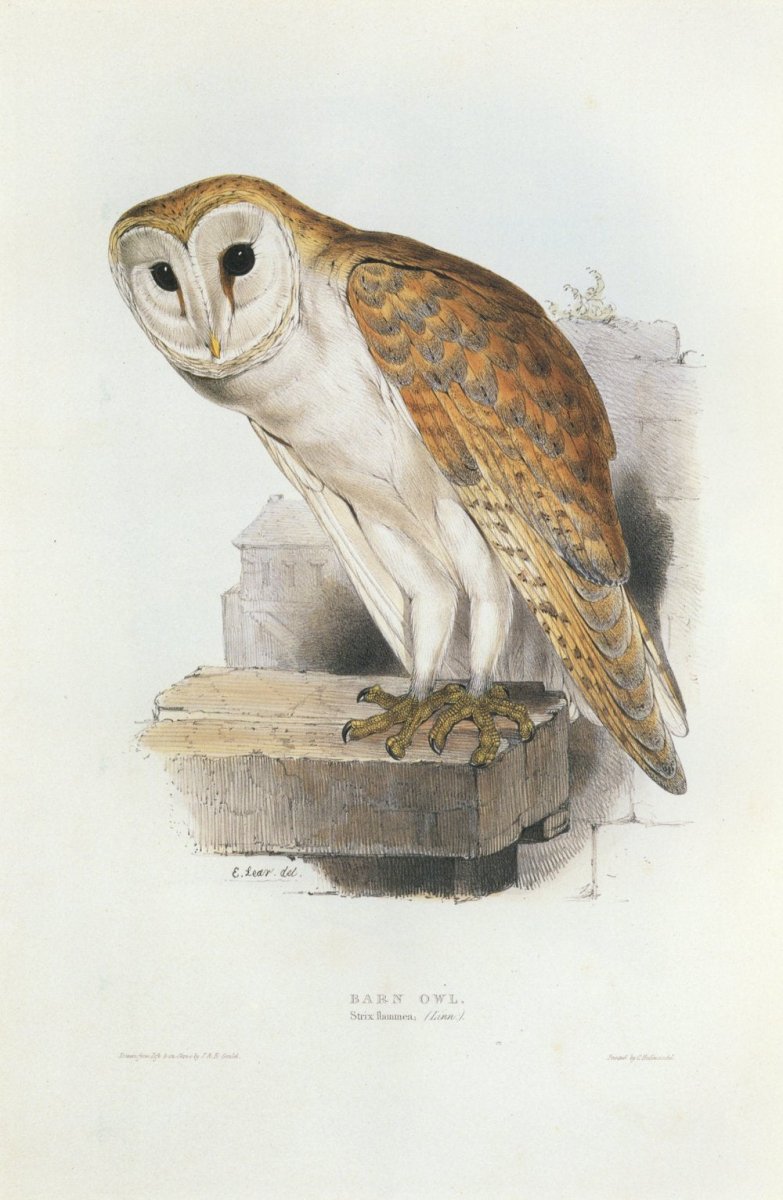
Edward Lear (1812-1888) was an English artist, illustrator, musician, author and poet, who is known mostly for his literary nonsense in poetry and prose and especially his limericks, a form he popularised.
His principal areas of work as an artist were threefold: as a draughtsman employed to make illustrations of birds and animals, making coloured drawings during his journeys (which he reworked later, sometimes as plates for his travel books) and as a minor illustrator of Alfred, Lord Tennyson's poems.
As an author, he is known principally for his popular nonsense collections of poems, songs, short stories, botanical drawings, recipes and alphabets. He also composed and published twelve musical settings of Tennyson's poetry.
Lear was born into a middle-class family at Holloway, North London, the penultimate of 21 children (and youngest to survive) of Ann Clark Skerrett and Jeremiah Lear, a stockbroker formerly working for the family sugar refining business. He was raised by his eldest sister, also named Ann, 21 years his senior. Jeremiah Lear ended up defaulting to the London Stock Exchange in the economic upheaval following the Napoleonic Wars. Because of the family's now more limited finances, when he was aged four, Lear and his sister were required to leave the family home, Bowmans Lodge, and live together. Ann doted on Edward and continued to act as a mother to him until her death, when he was almost 50 years of age.
Lear had lifelong health problems. From the age of six, he had frequent grand mal epileptic seizures, bronchitis, asthma and, during later life, partial blindness. Lear experienced his first seizure at a fair near Highgate when with his father. The event scared and embarrassed him. He felt lifelong guilt and shame for his epileptic condition, and his adult diaries indicate that he always sensed the onset of a seizure in time to remove himself from public view. When Lear was about seven years old he began to show signs of depression, possibly due to the instability of his childhood. He had periods of severe melancholia which he referred to as "the Morbids".
Lear was already drawing "for bread and cheese" by the time he was aged 16 and soon developed into a serious "ornithological draughtsman" employed by the Zoological Society and from 1832 to 1836 by the Earl of Derby, who kept a private menagerie at his estate, Knowsley Hall. He was the first major bird artist to draw birds from life rather than the skins of specimens. Lear's first publication, published when he was 19 years old, was Illustrations of the Family of Psittacidae, or Parrots in 1830. One of the greatest ornithological artists of his era, he taught Elizabeth Gould whilst also contributing to John Gould's works and was compared by some to the naturalist John James Audubon. In honour of Lear's bird illustrations, Anodorhynchus leari, popular name Lear's macaw, is named after him.
After his eyesight deteriorated too much to work with such precision on the fine drawings and etchings of plates used in lithography, he turned to landscape painting and travel. Among other travels, he visited Greece and Egypt during 1848-49 and toured India during 1873-75, including a brief detour to Ceylon. While travelling he produced large quantities of coloured wash drawings in a distinctive style, which he converted later in his studio into oil and watercolour paintings, as well as prints for his books. His landscape style often shows views with strong sunlight, with intense contrasts of colour.
Throughout his life, he continued to paint seriously. He had a lifelong ambition to illustrate Tennyson's poems; near the end of his life, a volume with a small number of illustrations was published.
In 1846, Lear published A Book of Nonsense, a volume of limericks which went through three editions and helped popularise the form and the genre of literary nonsense. In 1871, he published Nonsense Songs, Stories, Botany and Alphabets, which included the nonsense song "The Owl and the Pussy-Cat", which he wrote for the children of his patron Edward Stanley, 13th Earl of Derby. Many other works followed.
Lear eventually settled in San Remo, on his beloved Mediterranean coast in the 1870s at a villa he named "Villa Tennyson".
Lear was known to introduce himself with a long pseudonym: "Mr Abebika kratoponoko Prizzikalo Kattefello Ablegorabalus Ableborinto phashyph" or "Chakonoton the Cozovex Dossi Fossi Sini Tomentilla Coronilla Polentilla Battledore & Shuttlecock Derry down Derry Dumps", which he based on Aldiborontiphoskyphorniostikos.
After a long decline in his health, Lear died at his villa in 1888 of heart disease, which he had since at least 1870. Lear's funeral was described as a sad, lonely affair by the wife of Dr. Hassall, Lear's physician, none of Lear's many lifelong friends being able to attend.
Images to download
-
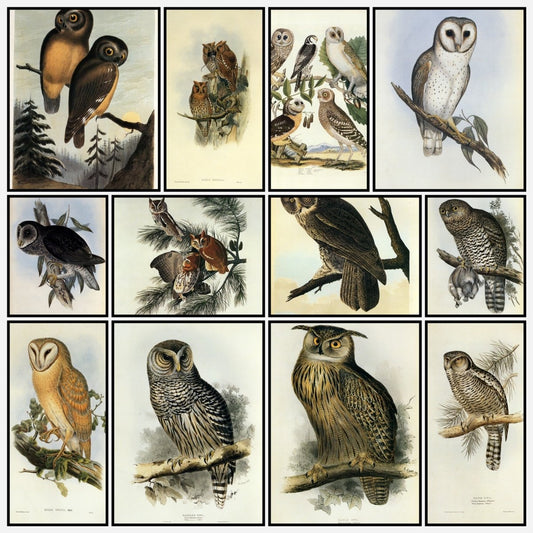
Owls - 40 Images
Vendor:Digital Download - 40 imagesRegular price £3.00Regular priceUnit price per -
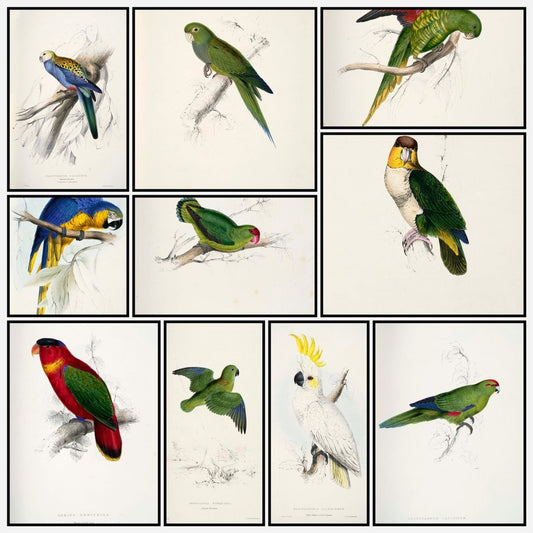
Family of Psittacidae, The 1832 - Edward Lear (1812-1888) - 42 images
Vendor:Digital Download - 42 imagesRegular price £3.00Regular priceUnit price per -
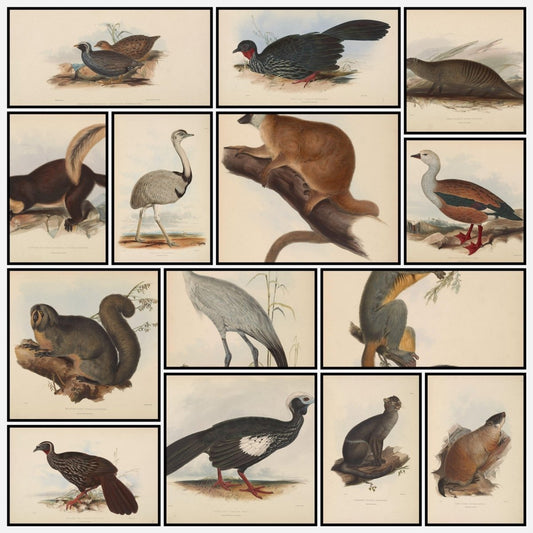
Gleanings from the Menagerie and Aviary at Knowsley Hall v.1 1846 - Edward Lear (1812-1888) - 17 images
Vendor:Digital Download - 17 imagesRegular price £2.00Regular priceUnit price per



Latest Picture Trove Blog Posts
View all-

Radical Harmony - Helene Kröller-Müller's Neo-Impressionists
We had the pleasure of visiting the National Gallery in London at the weekend where we saw Radical Harmony; Helene Kröller-Müller's Neo-Impressionists.
Radical Harmony - Helene Kröller-Müller's Neo-Impressionists
We had the pleasure of visiting the National Gallery in London at the weekend where we saw Radical Harmony; Helene Kröller-Müller's Neo-Impressionists.
-

Discovering Warwick Goble and The Book of Fairy Poetry: A Timeless Journey into Enchanted Realms
"The Book of Fairy Poetry", illustrated by Warwick Goble, is more than a century old yet continues enthralling readers of all ages with its spellbinding artwork and verses.
Discovering Warwick Goble and The Book of Fairy Poetry: A Timeless Journey into Enchanted Realms
"The Book of Fairy Poetry", illustrated by Warwick Goble, is more than a century old yet continues enthralling readers of all ages with its spellbinding artwork and verses.
-

William Orpen's 'To the Unknown British Soldier in France'
There is a fascinating story about this picture that not only highlights the pomposity and arrogance of the politicians of the time of World War I but has also introduced me to the word 'vainglory', which I hadn't heard before but which is no doubt appropriate for some of today's leaders.
William Orpen's 'To the Unknown British Soldier in France'
There is a fascinating story about this picture that not only highlights the pomposity and arrogance of the politicians of the time of World War I but has also introduced me to the word 'vainglory', which I hadn't heard before but which is no doubt appropriate for some of today's leaders.


